
How to Find a Hampton Owner
Finding a Hampton owner means working from the land toward the party named on paper. Start with the current situs address or a nearby intersection and select the parcel. Record its identifier, whether an RPC, GPIN, or LRSN. The owner field on the selected card gives the Assessor's owner of record. Next, open the grantor-grantee index and read the grantee line on the latest deed. A tax account clarifies the bills. A GIS map confirms the parcel shape. Neither one is the conveyance itself. Following that records trail beats guessing from a mailing label.
- Search the Hampton parcel by street address, intersection, RPC, LRSN or GPIN.
- Read the selected card’s owner field, situs and mailing information, legal description and transfer history.
- Search the named grantee in the Virginia land-record index and inspect the newest recorded deed.
- If the grantee is an entity or estate, check its public filing or probate context without treating that as deed proof.
Hampton’s Assessor Owner Field
Hampton's Assessor keeps the annual real-estate roll and publishes a parcel card for each property. City policy treats the owner as result information, shown only after you select a parcel. Public internet users cannot search by owner name there. The screen label for the owner field varies. But the listed party is the owner of record as the Assessor shows it. Updates track the annual assessment cycle. So a roll entry can trail a recent closing by some months. The Hampton Assessor's office and property-search page lays out the local parcel-search route. It also provides office contacts.
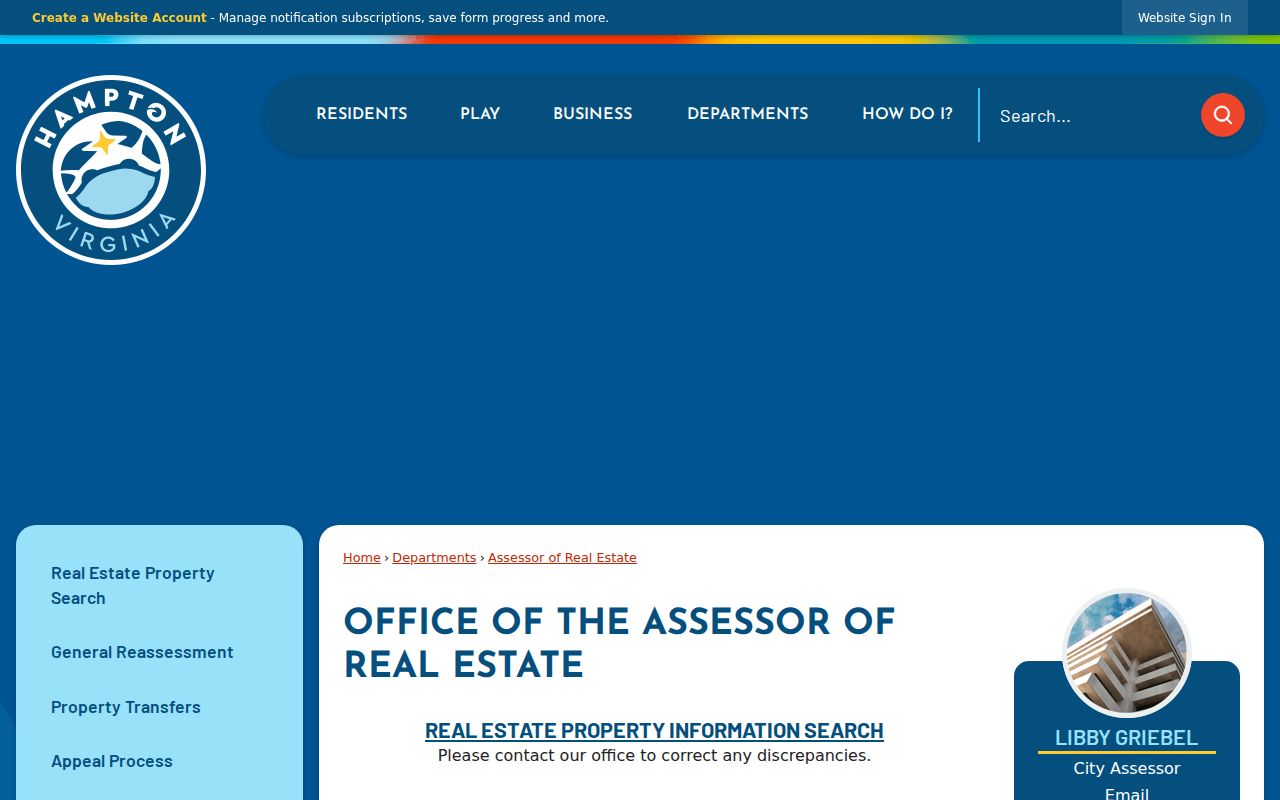
Begin on that route with an address or parcel number. The owner-name restriction still applies to public internet users. A freshly recorded deed can surface a transfer well before the assessor roll catches up. So the card is a lead, not the last word on title. Keep the situs address and the owner mailing address separate; they often differ. Hampton's Address Confidentiality Program can substitute a protected mailing address for a true residence. So a mailing label alone proves little.
Hampton Owner Records by Source
Different Hampton sources carry a party name, and each plays a distinct part. The Assessor roll gives the owner of record for a chosen parcel. The Virginia SRA land-record index lists grantors and grantees on recorded instruments. The Hampton Circuit Court Clerk handles local access to those land records. A company holding works differently. The State Corporation Commission points to its filing and registered agent. GIS pinpoints the parcel and its map identifiers. Match names to one parcel and date. Avoid stitching sources together by guesswork.
| Source | Owner Info It Gives | Access |
|---|---|---|
| Assessor parcel card | Owner-of-record entry and parcel facts after a parcel is selected | Public address/RPC parcel route; name search restricted online |
| Virginia land-record index | Grantor and grantee named on recorded instruments | SRA index where Hampton is enabled; images may require subscription |
| Virginia SCC filing | Entity name, status, registered agent and filing history | Public Clerk’s Information System; fields vary by record |
| Hampton GIS | Parcel polygon, GPIN, LRSN, situs and plan fields | Public map and parcel service; not an owner list |
An owner of record is simply the party a public record names. It says nothing about who lives there. Owners use different mailing addresses. They may hold title through an LLC or trust, or appear through an estate representative. Hampton's parcel card links the address to a party. But when the transfer date matters, the deed's grantee line is the record to inspect.
- Owner of record
- The party shown in Hampton’s selected parcel record or a recorded instrument.
- Grantee
- The party named as receiving the interest in a deed.
- Situs address
- The address used to identify the property itself.
- Mailing address
- The place notices are sent; it may differ from the situs.
- Title
- The legal ownership interest established through the full record chain, not one name field.
Hampton Trust, LLC and Estate Names
Deeds often name entities rather than people. A corporation, LLC, trustee, executor, or administrator can stand in the grantee line. The Virginia SCC Clerk's Information System adds context. It lists legal name, formation date, status, registered agent, principal office, and filing history. It cannot prove that a person controls every property the entity holds. Match the entity's spelling in the deed against the SCC filing exactly. Hampton Circuit Court probate records may explain a fiduciary's authority in an estate.
Parcel-card details anchor the search to the right land. These include the assessment neighborhood and legal description. The subdivision number matters too. A familiar trade name or registered agent is not automatically the owner. Read the grantee line and any vesting language closely. A deed of trust or lien is not a transfer at all.
Hampton Estate and Fiduciary Owners
An estate parcel can hide its real decision-maker. The Hampton tax roll may still carry a decedent's name long after death. The land record often tells a different story. It may list an executor, an administrator, a trust, the estate itself, or a named beneficiary. Start with the decedent and an approximate death date. Then ask the Hampton Circuit Court Clerk whether the probate file is active, archived, or indexed under an estate name. Those papers show who could sell. The recorded deed still does the legal work. It is the instrument that ties the court's decision to the parcel itself.
A practical route has three steps. Pin down the parcel and its legal description, locate the probate order or fiduciary, then search the estate and its fiduciary as grantor and grantee. An executor's deed or deed of distribution may be recorded after the probate matter begins. A death certificate proves only the death. It conveys no real estate. When the grantee is an LLC, Virginia SCC filings can reveal the entity's public status and registered agent, though they cannot prove who controls every asset. Never assume that a name in an obituary or directory owns the parcel; treat archival sources as leads and confirm each transfer through the Clerk's land index and the instrument itself.
Confirm the Hampton Grantee
The newest recorded deed settles most questions. It shows who received the parcel, and the Clerk's index reaches it by party name, book and page, or instrument number. Hampton's free SRA index and its subscriber image route work differently. An index hit identifies a record. The image may need Clerk approval and payment. If a result will not open or looks incomplete, ask the Clerk about the online cutoff and copy fees.
Read the deed date, recording date, grantor, grantee, and legal description together as one picture. Transfers happen without a conventional sale. Family members deed to each other constantly. A deed of trust, release, assignment, lis pendens, or judgment may name the same owner yet convey no title. Different records answer different questions. The Hampton current-owner process leans on the assessor roll and the newest transfer, while Hampton deed records walks through the instrument itself.
Limits of a Hampton Owner Lookup
A Hampton owner lookup has firm limits. It will not reveal an occupant, guarantee clear title, or expose every protected detail. Virginia keeps some records closed. Vital records, court files, and voter information each carry public-access restrictions. The Virginia Address Confidentiality Program gives eligible survivors a substitute address, so an address in a record may not be anyone's home. Keep the parcel path to research, due diligence, and civic purposes, since a name on one roll or index never proves a person owns no other parcel. Every result is one piece of a larger picture.
The Virginia Department of Health vital-records guidance covers those limits.
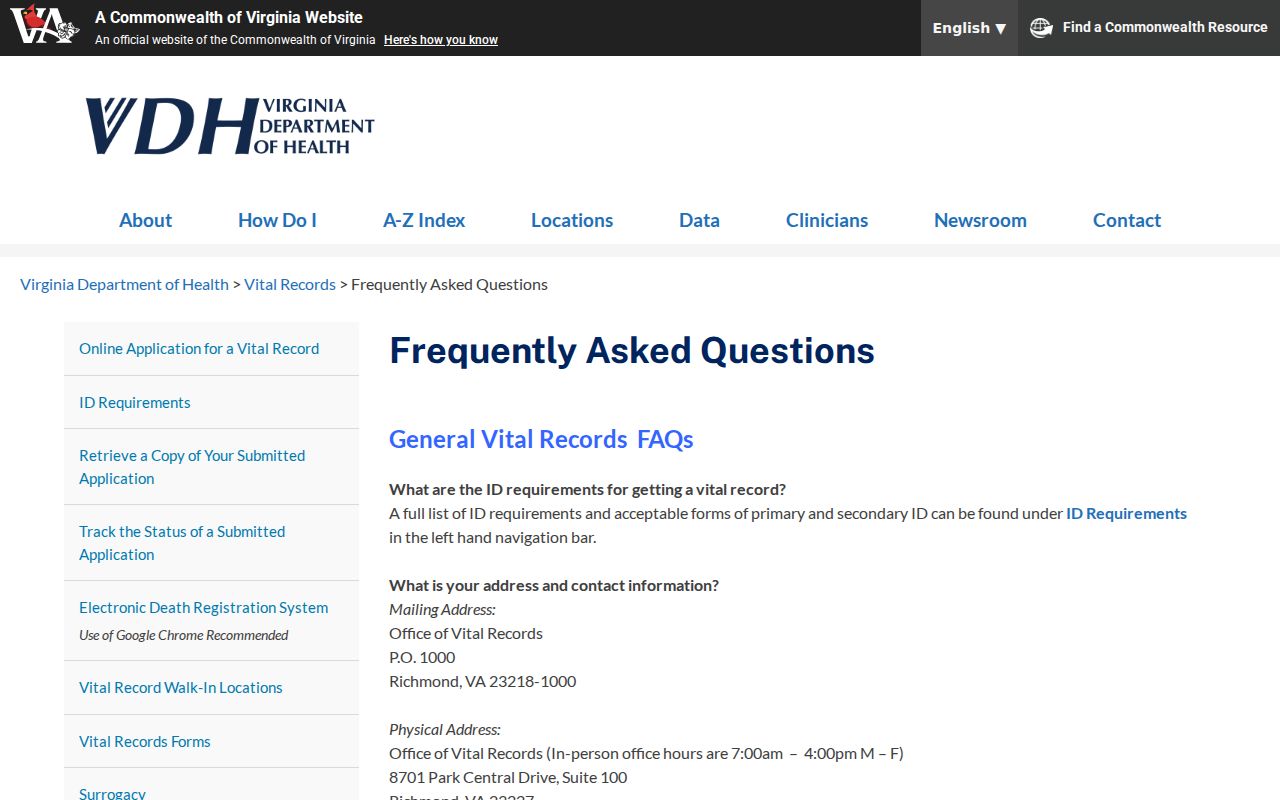
These state rules govern access to vital records, not ownership of Hampton real estate. They explain why a personal detail may be restricted.
Lawful use. Hampton owner information is for legitimate property research and civic use. Do not use a name or mailing address to stalk, threaten or harass anyone, and do not attempt to bypass access limits.
Hampton Alternatives to Name Search
Start with the street address instead. Enter it in the city parcel search or map. Pull up the selected parcel and write down the GPIN, the LRSN, and the lot and subdivision details shown there. Those identifiers open doors at the Hampton Assessor, reachable at 757-727-8311 or at One Franklin Street, Suite 602. The city provides parcel lookup by location, but its public internet policy bars searching the assessment roll by owner name. So frame the question around a parcel. A counter or telephone inquiry tied to a specific parcel gets farther than a request for a name sweep, and the city offers no guaranteed response time.
Recorded transfers live elsewhere. The Clerk's land-record index holds the deed history. The Statewide Searchable Automated Land Records system can offer a free document index where enabled. Viewing or obtaining an image may still require authorization or a subscription. The Clerk's office sits at 237 North King Street. General hours run 8:30 a.m. to 4 p.m., with a 3:30 p.m. recordation cutoff. Ask about access paths before traveling. Confirm which copy process applies too. The Assessor roll answers who is listed for assessment, while the recorded deed remains the document to review for the conveyance itself.