
Hampton’s Backward Deed Trail
Former Hampton owners emerge one deed at a time. Pull the newest deed for the parcel first. Note its grantor, grantee, recording date, deed type and legal description, then hunt that same grantee in the grantor role to reach the earlier transfer. The Hampton Circuit Court Clerk keeps the land records. Virginia SRA hosts the online index, and it runs only where the Clerk has enabled access. No start year is published. Confirm the span with the Hampton Clerk before trusting the oldest result in any chain of title.
| Source | Years It Covers | Where Held | What It Shows |
|---|---|---|---|
| Virginia SRA index | Hampton cutoff year not confirmed | Virginia Courts / Hampton Clerk | Party and instrument leads where enabled |
| Deed books and plats | Ask the Clerk for available volumes and formats | Hampton Circuit Court Clerk | Recorded transfers and legal descriptions |
| Elizabeth City County deeds and wills | Historic run not fully inventoried | Hampton Special Collections | Older locality records and estate context |
| Hampton city directories | Earliest noted directory is 1896 | Hampton Library | Address and name context, not title |
Use SRA when the deed year is covered. Images cost extra steps. For a missing image or an earlier year, ask the Clerk about a counter search, deed book, microfilm or archived retrieval. The Library aids historic context. A directory connects a household to a street, while a deed establishes a recorded land transfer, so each source answers a different question about a Hampton parcel.
Hampton’s Online Index Cutoff
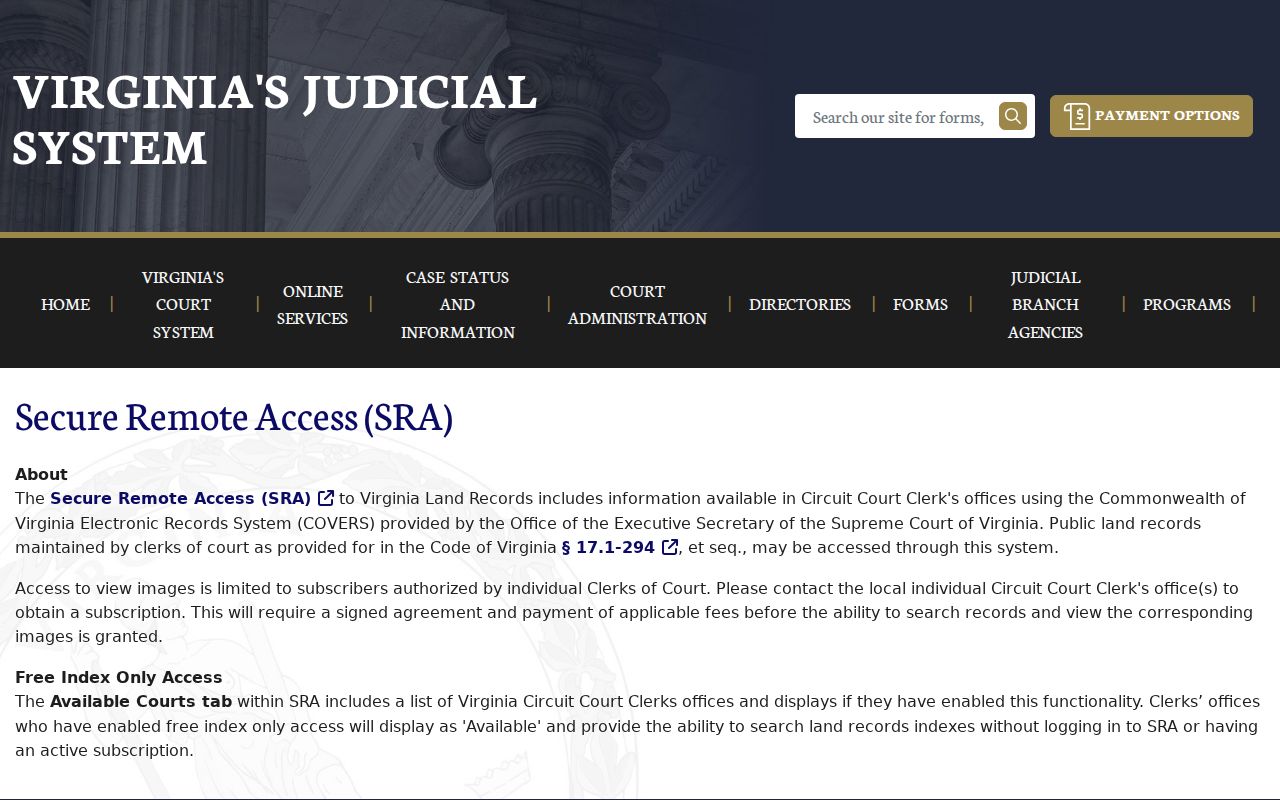
Hampton's earliest online index year goes unstated. Virginia SRA's Available Courts list shows which courts offer free index-only access. Images work differently. They require the local Clerk's authorization, a signed subscriber agreement and any applicable payment. So "online" never means full coverage. Ask the Hampton Clerk directly. Confirm which years, instruments and image options apply to your deed chain.
The Virginia SRA land-record page draws the line between free index access and subscriber images, which is why a Hampton chain may begin online and then need a clerk-assisted step.
Note: record only the online cutoff year the Hampton Clerk confirms, never a guessed date, in any chain summary.
Walk Back Through Hampton Deeds
A chain steps backward from the latest grantee to that party's acquisition deed, then to the next prior grantor. Follow every recorded reference. Read the full legal description each time. A deed may call the land "being the same property" as an earlier filing, and that cited book or instrument number matters far more than a street address. Parcels sometimes split or merge. When they do, branch the chain and use plats to decide which prior description covers each piece of Hampton land.
- Find the newest recorded Hampton deed for the parcel and capture both parties and the exact land description.
- Search the grantee backward as a grantor, using spelling variants and any cited prior instrument.
- Compare each prior deed’s lot, block, subdivision or metes-and-bounds calls with the current parcel.
- When SRA stops, ask the Clerk for the next deed book, microfilm or retrieval path.
- Grantor and grantee
- The party transferring and the party receiving an interest in the instrument.
- Chain of title
- The ordered sequence of recorded conveyances for the same land.
- Legal description
- The written parcel description that can persist when street names or parcel numbers change.
Hampton, Phoebus and County Records
Hampton's modern boundary took in the former Elizabeth City County and the Phoebus area on July 1, 1952. A deed or will from before that switch may cite the older locality even though the parcel now sits in Hampton. So search all three names. Do this whenever a chain seems to stop cold. Compare legal descriptions. Two records that look unrelated may still describe the same land. Hampton incorporated in 1908. Its existing charter dates to 1952. Those political shifts shape the labels waiting in an old Hampton index.
Fires did consume formal city records. The exact years and affected volumes stay unclear. The Library of Virginia and the Hampton Library can help identify surviving books, copies or indexes. Never infer a specific gap from the general fire history alone.
Hampton’s 1896 Directory Clue
The Library's earliest Hampton directory dates to 1896. Directories are clues, not deeds. They tie a name to a street and help interpret an old address, but they prove nothing about title. Hampton Special Collections holds far more than directories. Its shelves include Hampton and Newport News directories, Elizabeth City County wills and deeds, newspapers on microfilm, the Daily Press obituary index, Sanborn maps, yearbooks, photographs and maps. An obituary can suggest a family link. Chase that link in probate or land records.
The Virginiana and Genealogy page describes the collection and the range of local history sources it offers. Those sources shine when an old Hampton chain contains a street or name that is hard to match.

Note: use a directory to frame a question for the Clerk, never as a substitute for the recorded conveyance itself.
Hampton Library Mail Requests
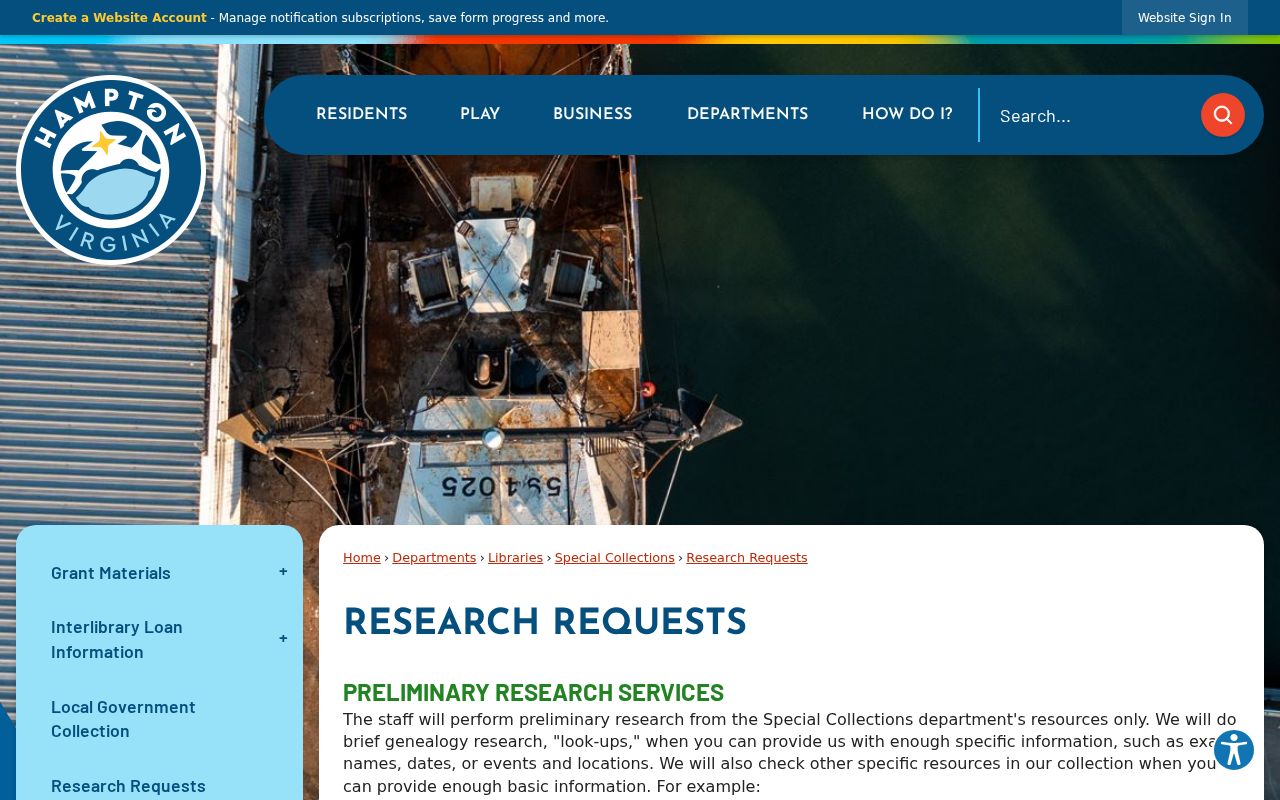
Special Collections takes research requests by mail only. Send a focused letter. It should give the known name, date, place and event. Enclose a self-addressed stamped envelope, and address everything to Hampton Public Library, Attention Special Collections, 4207 Victoria Boulevard, Hampton, VA 23669. The Library charges no set research fee, welcomes donations, and sends photocopies only by mail. Book an appointment for the genealogy computers. Ancestry Library Edition stays in-house. It is not a remote Hampton search.
The Hampton research-request page explains the mailing process and shows why the request channel rewards a specific question.
Note: ask for a known document or a local-history lead, and do not expect the Library to certify land title.
Hampton Estate Transfers
Estates can break a clean person-to-person chain of title. Probate names a personal representative. The file may show a will, an executor, or a court-appointed administrator. A later instrument often transfers the parcel to an estate, a trust, or an heir. Search the decedent and the representative in the Hampton deed records. Both names can appear in the land index. A death certificate proves a death but conveys nothing. The instrument that matters is the recorded executor's deed, administrator's deed, or deed of distribution.
When a probate transfer does not lead to the grantor you expected, ask the Clerk for help. The file may sit in storage or be indexed under the estate name. Lay the deed's legal description beside the parcel. Hunt for a court order authorizing the sale or distribution. Hampton's Circuit Court keeps the local probate and land-record counter. For earlier generations, the Library's Elizabeth City County materials add family and locality context worth checking.
How Far Hampton Ownership Reaches
Hampton's online property records have no fixed start year. The first volumes of local deeds begin on dates the Circuit Court Clerk or an archive catalog can confirm. The microfilm behind them does the same. Guessing a cutoff only invites error. The Hampton Library holds a directory reaching back to 1896. It also holds Elizabeth City County deeds and wills. Those collection dates do not equal a complete chain of title. Start online where Hampton appears through SRA. Then move to the Clerk's counter, the deed books, or microfilm.
When the chain runs back past the indexed era, check the Library of Virginia catalogs. Also check Hampton Special Collections. Fire destroyed parts of the city's early records. Treat that loss as a reason to ask which series survived. It is not proof that a particular owner or deed vanished.
Lawful use. Use former-owner research for a house history, estate question or property due diligence. Do not use a historical record to track, threaten or harass a living person.